

How to host a virtual coffee tasting
Hosting a virtual coffee tasting can be a fun and interesting way to meet other coffee lovers and learn about different kinds of coffee. Here are the steps you need to take to host a virtual coffee tasting:
Step one: Pick the right coffees
The first step in hosting a virtual coffee tasting is to choose the right coffees to show. You can choose to focus on a certain region, roast level, or type of coffee. It’s important to make sure that everyone can easily get to the coffees you choose. To offer a well-rounded experience, it’s also a good idea to choose a range of coffees with different tastes.
Step 2: Set up the video call
Next, you need to set up a video call for the tasting. Popular video conferencing platforms like Zoom or Google Meet work well for this. Make sure to send everyone an invitation with the date, time, and link to the video call for the tasting.
Step 3: Get the coffee ready
Before the tasting, you should grind the coffee beans and brew each coffee. It’s best to make each cup of coffee the same way to make sure they all taste the same. Also, it’s helpful to label each coffee with its name and any relevant information, like where it comes from or how much it’s been roasted.
Step 4: Make a sheet for tasting
Make a tasting sheet so that people can keep track of each coffee and the order in which they tasted them. This should have the name of each coffee and some information about it, as well as a place for people to write down their thoughts on the taste, smell, and overall experience of each coffee.
Step 5: Begin the tasting
Once everyone has joined the video call, start the tasting by introducing each coffee and giving any relevant information about where it comes from or how much it has been roasted. Invite people to smell and taste each coffee and write down what they think. It can also help to get people to talk about their ideas and talk about each coffee as a group.
Step 6: Sum up and talk about it
After you’ve tried all of the coffees, you can wrap up the tasting by talking about each coffee and any interesting tastes or impressions. It’s also a good idea to tell the people who came where they can buy the coffees they tried.
By following these steps, you can host a fun and informative virtual coffee tasting for everyone involved.
The benefits of virtual coffee tastings
In the past few years, virtual coffee tastings have become more and more popular, and for good reason. Here are some reasons to host or go to a virtual coffee tasting:
Convenience
One of the best things about virtual coffee tastings is that they are easy to do. You don’t have to leave your house to take part in a virtual tasting. You can do it from the comfort of your own home. This makes it easier for coffee lovers to attend tastings without having to worry about scheduling conflicts or travel costs.
Cost-effectiveness
Most of the time, virtual coffee tastings are also cheaper than tastings in person. Since you don’t have to rent a space or pay for travel, hosting or going to a virtual tasting is usually less expensive. This makes it easier for people who might not be able to go to a tasting in person because of the cost.
A chance to try more kinds of coffee
Virtual coffee tastings also let you try a wider variety of coffees than tastings in person. Virtual tastings make it easier to try coffees from different regions and roasters, no matter where you are. This lets people try new and different kinds of coffee that they might not have had the chance to try otherwise.
Learning and education
Virtual coffee tastings also give people the chance to learn and educate themselves. Participants can learn about where different types of coffee come from and how they are made, as well as how they are roasted and what their flavors are like. This can be very helpful for people who are just starting to taste coffee or who want to learn more.
Bringing people together
Lastly, virtual coffee tastings give you the chance to meet other coffee lovers and feel like you belong to a group. Participants can share their thoughts and experiences with each other and learn from each other. This can be especially helpful for people who don’t have access to a coffee community in their area.
Virtual coffee tastings offer many benefits, including convenience, cost-effectiveness, the ability to try a wider range of coffees, learning and education, and community building. Since that’s the case, it’s not surprising that they’ve become so popular with coffee lovers in recent years.
Exploring different coffee regions
One of the best parts of virtual coffee tastings is that you can learn about the different places where coffee is grown. Each region has its own special qualities that show up in the coffee it grows. Here are some of the regions you might explore during a virtual coffee tasting:
Latin America
Some of the best-known places to grow coffee in the world, like Colombia, Brazil, and Costa Rica, are in Latin America. Latin American coffees are often known for their balance and clean, crisp flavors, with notes of chocolate, nuttiness, and citrus.
Africa
African coffees are known for having strong acidity and complex, fruity flavors. Countries like Ethiopia, Kenya, and Rwanda produce some of the most highly sought-after coffees in the world, with flavor notes that range from blueberry and black currant to jasmine and bergamot.
Asia
Asian coffees, such as those from Indonesia, Vietnam, and Thailand, are known for their earthy, spicy flavors, with notes of tobacco, leather, and pepper. Most of the time, these coffees are grown at lower altitudes and processed in unusual ways, such as by wet-hulling, which gives them their unique taste.
Middle America
Central American coffees, including those from Guatemala, Honduras, and Nicaragua, are known for their bright acidity and nutty, chocolatey flavors. The crisp, clean taste of these coffees comes from the fact that they are often grown at high altitudes.
Oceania
Oceania is home to some of the world’s most unique and interesting coffees, including those from Papua New Guinea and Australia. These coffees often have flavor notes that range from fruity and floral to spicy and savory, with a distinctively bold, full-bodied character.
By exploring the different coffee regions during a virtual coffee tasting, participants can gain a deeper appreciation for the diversity and complexity of coffee. They can also learn more about the factors that influence coffee flavor, such as altitude, climate, and processing methods. Overall, virtual coffee tastings provide a fun and engaging way to explore the world of coffee and discover new flavors and experiences.
The role of cupping in coffee tasting
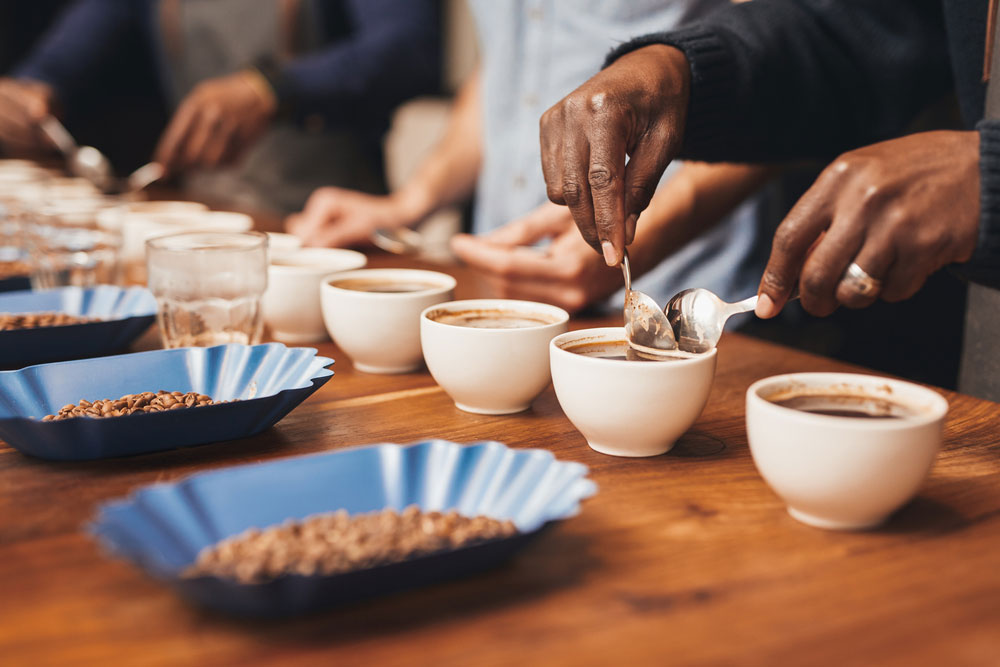
Cupping is a standardized process used by coffee professionals to evaluate and compare different coffees. It involves a series of steps that are designed to ensure that each coffee is tasted under the same conditions, so that the differences in flavor and aroma can be accurately assessed. Here’s a closer look at the cupping process and its importance in coffee tasting:
Preparation
The first step in cupping is to prepare the coffee. This involves grinding the coffee beans, weighing out the appropriate amount of coffee, and adding it to a cup or bowl. Hot water is then poured over the coffee, and the coffee is allowed to steep for a set amount of time.
Smelling
After the coffee has steeped, the aroma is assessed by sniffing the surface of the coffee. This step is important because the aroma can provide clues about the flavor and quality of the coffee.
Tasting
Next, the coffee is tasted. A spoon is used to slurp the coffee, which aerates it and helps to distribute the coffee across the palate. The taster then evaluates the flavor, acidity, body, and aftertaste of the coffee.
Scoring
Finally, the taster scores the coffee based on a set of criteria, such as aroma, flavor, and overall quality.
The cupping process is important in coffee tasting because it ensures that each coffee is evaluated under the same conditions. This allows tasters to make accurate comparisons between different coffees and to identify the unique flavor and aroma characteristics of each coffee.
If you’re interested in cupping coffee at home, there are a few tips you can follow to ensure that you’re doing it correctly:
Employ a standardized recipe
To ensure that you’re preparing the coffee correctly, it’s important to use a standardized recipe. This will ensure that you’re using the correct amount of coffee and water and steeping the coffee for the appropriate amount of time.
Use freshly roasted coffee
Freshly roasted coffee will have the most pronounced flavor and aroma characteristics, so it’s important to use freshly roasted coffee when cupping.
Use a cupping spoon
Using a cupping spoon will allow you to slurp the coffee and distribute it evenly across your palate, which is important for accurately assessing the flavor and aroma of the coffee.
Take notes
Finally, it’s important to take notes during the cupping process. This will allow you to remember the unique characteristics of each coffee and make accurate comparisons between different coffees.
Cupping is an important process in coffee tasting that allows tasters to evaluate and compare different coffees under standardized conditions. By following a few simple tips, you can cup coffee at home and gain a deeper appreciation for the unique flavors and aromas of different coffees.
Pairing coffee with food
Pairing coffee with food is a great way to elevate your taste experience and explore new flavor combinations. Here are some tips on how to pair different coffees with different foods:
Match the intensity
When pairing coffee with food, it’s important to consider the intensity of both the coffee and the food. A strong coffee should be paired with a bold or intense flavor, while a lighter coffee should be paired with a more delicate flavor.
Consider the roast
The roast level of the coffee can also play a role in pairing. Darker roasts are typically bolder and more intense, while lighter roasts are often more delicate and nuanced.
Look for complementary flavors
When pairing coffee with food, look for flavors that complement each other. For example, a coffee with chocolate notes may pair well with a chocolate dessert, while a coffee with citrus notes may pair well with a citrusy salad.
Experiment
There are no hard-and-fast rules when it comes to pairing coffee with food, so don’t be afraid to experiment and try new things. You may discover unexpected flavor combinations that you love.
Here are some specific coffee and food pairings to try:
Dark roasted coffee with chocolate cake
The bold, rich flavor of a dark roast coffee pairs well with the deep, chocolatey flavor of a chocolate cake.
Medium-roast coffee with fruit salad
A medium-roasted coffee with bright, fruity notes pairs well with a refreshing fruit salad.
Light roasted coffee with croissants
The delicate, nuanced flavor of a light roast coffee pairs well with the buttery, flaky texture of a croissant.
Espresso with cheese
The bold, intense flavor of espresso pairs well with the salty, savory flavor of cheese.
Cold brew coffee with grilled salmon
The smooth, mellow flavor of cold brew coffee pairs well with the smoky, savory flavor of grilled salmon.
Pairing coffee with food can be a fun and delicious way to explore new flavor combinations. By considering the intensity and roast of the coffee, looking for complementary flavors, and experimenting with different pairings, you can discover new ways to enjoy your favorite foods and beverages.
The history of coffee tasting
Coffee has been an important part of many cultures for centuries, and the art of coffee tasting, or cupping, has a long and fascinating history. Here’s a brief overview of the history of coffee tasting:
Origins of coffee tasting
The origins of coffee tasting can be traced back to the early days of coffee cultivation in Ethiopia, where coffee was brewed in a traditional manner and tasted by the local people. As coffee spread to other parts of the world, including the Middle East and Europe, the practice of tasting coffee also became more widespread.
Evolution of coffee tasting
In the 19th century, coffee tasting became more formalized, and the concept of cupping was developed as a way to evaluate the quality of coffee beans. Cupping involves evaluating the aroma, flavor, and mouthfeel of coffee in a standardized way and has since become the standard method for evaluating coffee.
In the 20th century, coffee tasting became even more important as the demand for specialty coffee grew. Coffee cupping competitions, such as the Cup of Excellence, were established to recognize the best coffees in the world, and coffee tasting became a critical part of the coffee industry.
Influential figures in the history of coffee tasting
There have been many influential figures in the history of coffee tasting, including:
Carl Linnaeus, a Swedish botanist who first classified coffee as a distinct plant species in the 18th century,
Antoine Galland, a French scholar who introduced coffee to Europe and helped popularize the beverage
Alfred Peet, the founder of Peet’s Coffee, is credited with introducing specialty coffee to the United States in the 1960s.
Tim Wendelboe, a Norwegian coffee expert who has won numerous awards for his coffee roasting and cupping skills,
Today, coffee tasting continues to be an important part of the coffee industry as well as a fun and informative way for coffee lovers to explore new flavors and learn more about the art of coffee. Whether you’re a professional coffee taster or a home coffee enthusiast, the history of coffee tasting is a fascinating topic to explore.
The future of virtual coffee tastings
Virtual coffee tastings have become increasingly popular in recent years, and it is likely that they will continue to grow in popularity in the future. Here are some potential ways that virtual coffee tastings may evolve:
More advanced technology: As technology continues to advance, it is likely that virtual coffee tastings will become more sophisticated. For example, virtual reality technology could allow participants to feel like they are in the same room as the coffee roaster, creating a more immersive experience.
Increased accessibility: Virtual coffee tastings have the potential to make high-quality coffee accessible to people who may not have access to specialty coffee shops or roasters. This could be especially beneficial for people who live in rural areas or regions where specialty coffee is not widely available.
Customized experiences: In the future, virtual coffee tastings may become more personalized, with participants having the ability to choose the type of coffee they want to taste and the format of the tasting. This could allow for more tailored experiences and help to create a deeper connection between the consumer and the coffee.
Increased sustainability: Virtual coffee tastings have the potential to reduce the environmental impact of traditional coffee tastings, as they eliminate the need for travel and reduce waste from disposable cups and other materials. This could make virtual coffee tastings a more sustainable option for coffee lovers and the industry as a whole.
Greater collaboration: Virtual coffee tastings could also lead to greater collaboration between coffee roasters and consumers, as participants have the opportunity to provide feedback and engage with roasters in real-time. This could help to create a more transparent and collaborative coffee industry.
Overall, the future of virtual coffee tastings looks promising. As technology continues to evolve and consumers become more interested in exploring the world of specialty coffee, virtual tastings may become an increasingly important part of the coffee industry. Whether you’re a coffee professional or a home enthusiast, virtual coffee tastings offer a unique and engaging way to discover new flavors and learn more about the world of coffee.